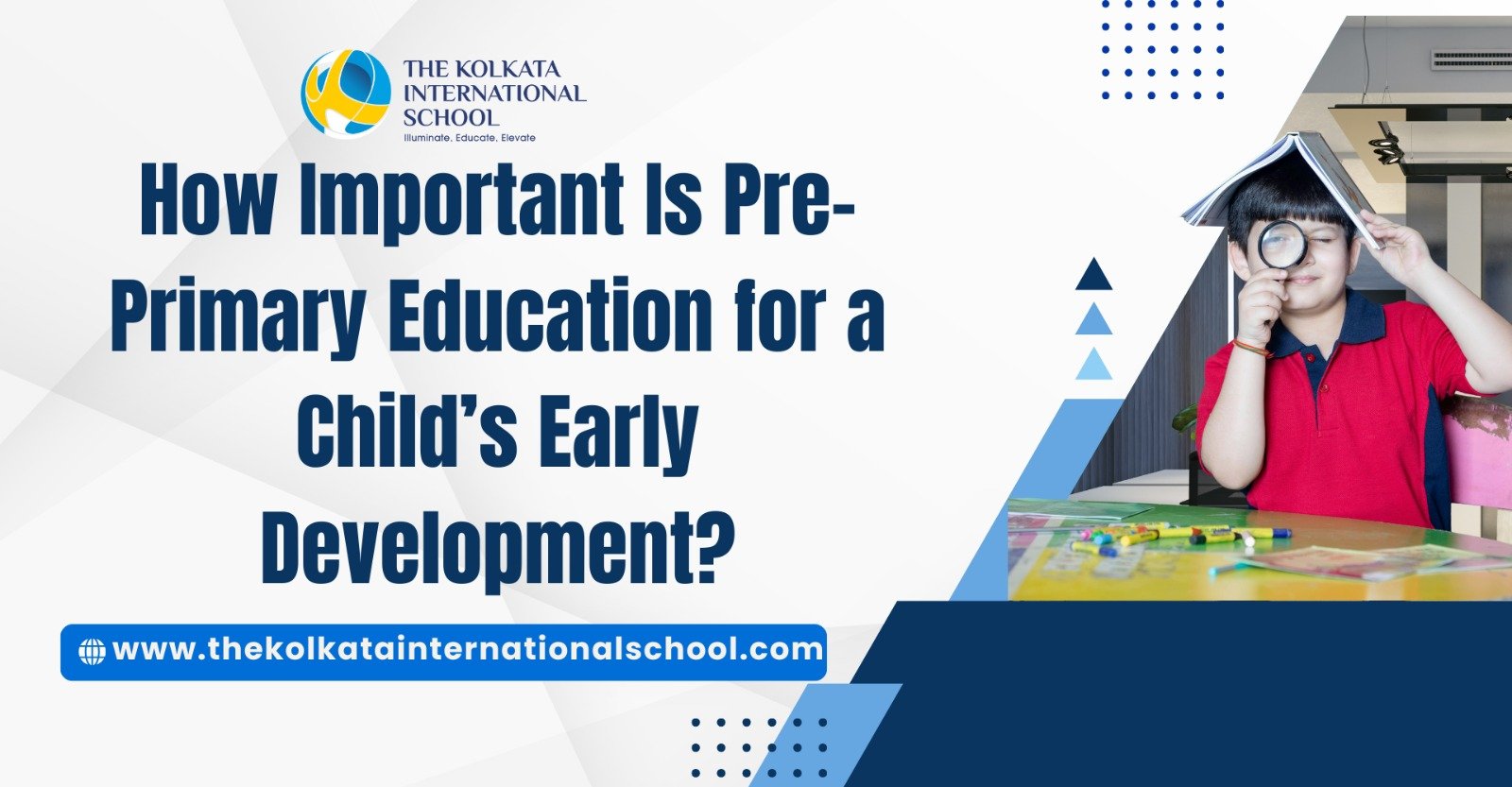
The most vital phase of a child's life is during early childhood. This is the stage when they get to know about the world around. The kind of experiences a child is exposed to in these nascent years shapes his cognitive skills, behavior, habits and attitude to learn new things in future. Preferably a pre-primary education in such cases helps a little one grow up happily and confidently. At The Kolkata International School, an extra effort is given to make sure children are provided with a safe, happy and meaningful learning environment during their initial educational journey.
1. What makes an early education so advantageous?
The fastest developing part of a toddler is his brain during the ages of 2-6 years. While children are innately inquisitive and love to play, read and observe their environment, Early education enables to channelize this curiosity for good. With simple actions of singing rhymes, storytelling, drawing, and playing the child learns basic concepts like identification of shapes, shades, numbers and alphabets.
But most importantly children learn listening and following instructions, cooperation, affection and the strength to express their emotions. Gaining these skills from early education makes it a lot easier when children switch on to the next class. A strong foundation at the beginning minimizes the pressure of reading and memorizing just the topics.
2. Providing confidence and social skills
Pre-primary education is very helpful in developing children’s confidence, bravery and social skills. When kids go to school at an early age, they get to learn the importance of patience, politeness, taking turns, sharing their belongings and kindness. Especially in the case of The Kolkata International School where special efforts are made to ensure children are provided with a cordial environment, children feel happy to converse, share and ask questions which make them bold.
3. Learning through activities and play
Children learn better when engaged through play. So pre-primary classrooms are child friendly and bright so that young kids are involved and interested throughout the day. Individual acts like dancing, free unstructured drawing, story acting and group activities like doing puzzles, dancing and singing increase their motor and creative skills and boost up their mental health.
4. Progressing on towards classes of higher standard
Pre-primary education should be viewed as an intermediate step between home and school in pre first classes. During this period children are progressively introduced to scheduled classes, routines, safety measures, silent listening and based on this, their future classes can be better structured. Parents who look for admission open for Montessori in Howrah want a school that offers full attend, play and learn sessions instead of rote learning.
Similarly the parents looking for KG admission in Howrah prefer a school that for providing more than just academics. When children are exposed to familiarity and feel comfortable, they tend to progress a lot smoothly when they switch to our higher class.
5. Teachers and school environment
Pre-primary education heavily depends on the attitude of teachers. Teachers are the guardians and cheerleaders that guide a child every step of the way. When teachers are well trained and get to know every individual child's needs of learning, they are able to inject positivity and motivation into their minds which build self-confidence and trust in their capabilities.
At The Kolkata International School, well trained teachers in a hygienic and friendly environment make learning a pleasurable experience. They develop the physical, mental, social and emotional aspects of each child while not neglecting quality and high standards of cleanliness and child protection. People looking for admission for pre-primary school in Howrah ideally would choose such schools.
6. Positive starts in preparation for future
Learning through pre-primary education is not just learning through alphabets or numbers but it is about developing the kernel of a child's learning potential, instilling positive attitudes and habits and behaves proactively and positively all along.
Children who undergo pre-primary education successfully from an established school are able to grow confident, self-reliant, and impatient enough to take up challenges of future classes and lives. Such children grow into complete groomed individuals who are confident of their own strengths and good habits and positive attitude.
Conclusion
The importance of pre-primary education keeps coming to the fore when we decide about a child's early education. Choosing the right one is the most vital of decision for parents and the respective better school, the best choice. This helps children keep a cheerful attitude towards learning and give a good start to a bright future.
Frequently Asked Questions (FAQ)
1. Why is pre-primary education important for early childhood development?
Pre-primary education helps children develop essential cognitive, emotional, and social skills. It encourages curiosity, communication, and problem-solving, creating a strong foundation for academic success and lifelong learning.
2. What skills do children learn in pre-primary school?
Children learn early literacy, basic numeracy, motor skills, emotional regulation, teamwork, creativity, and self-confidence through structured play and interactive learning activities.
3. At what age should a child start pre-primary education?
Most children begin pre-primary education between the ages of 2.5 to 4 years, depending on school guidelines and the child’s readiness for social interaction and structured learning.
4. How does pre-primary education support social development?
It helps children learn to share, communicate, cooperate, and build friendships. Group activities and guided play teach empathy, respect, and positive behavior in a supportive environment.
5. How does The Kolkata International School nurture early learners?
The Kolkata International School offers a child-centered curriculum, trained educators, safe learning spaces, and activity-based programs that promote holistic development and joyful learning experiences.
6. What role do teachers play in pre-primary education?
Teachers guide children through interactive learning, observe individual growth, encourage creativity, and provide emotional support to help each child feel confident and valued.
7. How does pre-primary education prepare children for primary school?
It builds early reading, writing, listening, and classroom behavior skills, making the transition to formal schooling smoother and more confident for children.
 E-Brochure