Do you know the difference between concept based learning and rote learning? There is a great difference between concept based learning and rote learning. Education is the main thing which students must get from their early age. Are you a worried parent and looking for the best CBSE English medium school in Howrah for your child? If yes, then you are reading the useful blog.
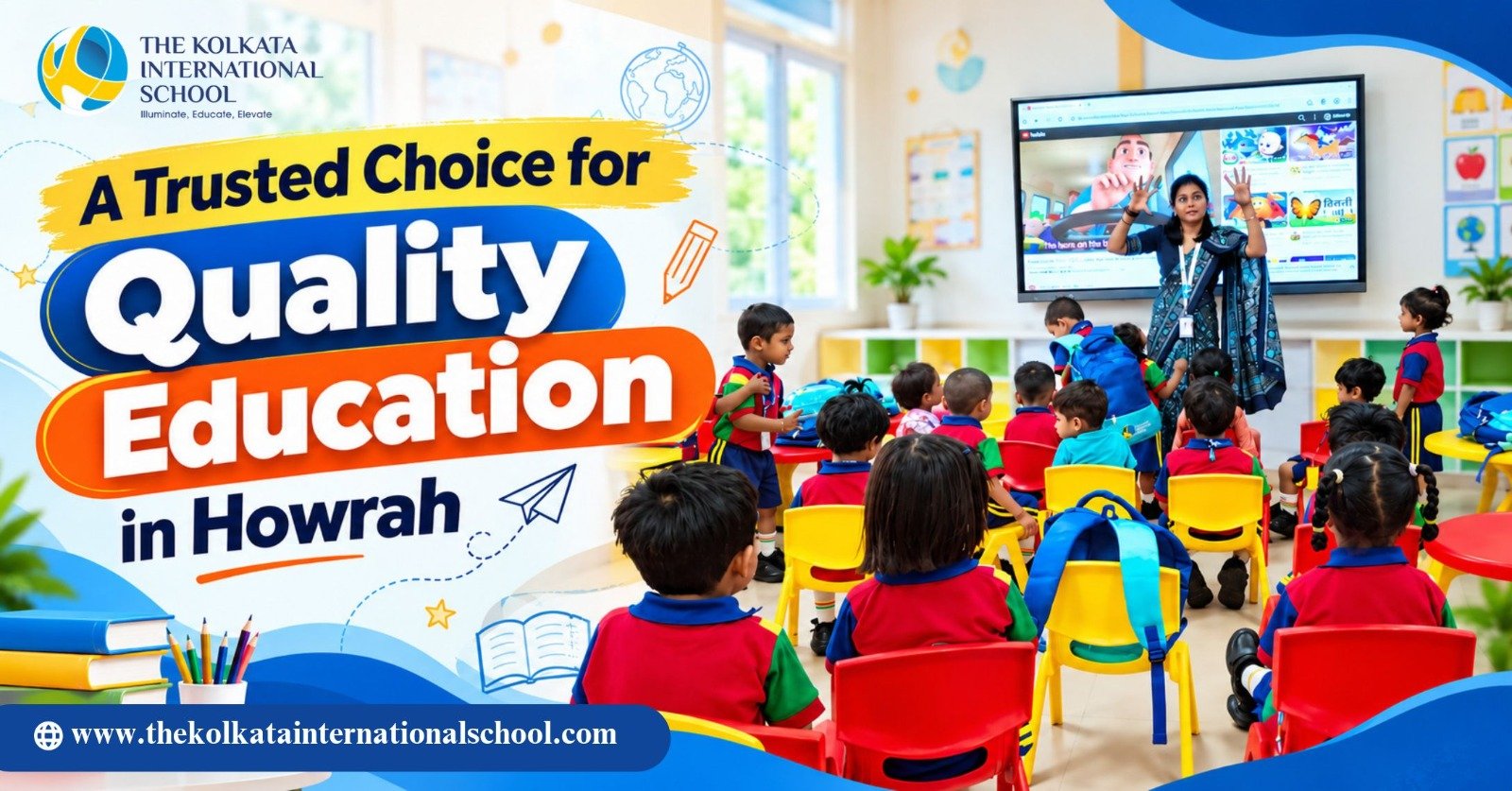
The Kolkata International School is located in Liluah and known as one of the Howrah best CBSE school. The classes starts from Nursery to VIII with experienced teachers. Children will receive the best kind of educational facilities for their future benefits. Our school not only focuses on giving value-based education to child, also we encourage students to take part in different cultural and co-curricular activities. We have dedicated sports teachers who let students know about different sports. Some of the services provided by our school are mentioned below –
Concept based learning is a method that encourages students to understand the “why” behind every idea and instead of simply memorising facts. In this blog we will explore why concepts based learning works far better than rote learning.
Understanding over memorisation
Children of the top CBSE English medium school in Howrah are encouraged to understand over memorisation. Rote learning focuses on repetition. A child may memorise multiplication tables but without understanding the concepts. Students develop deeper comprehension and they retain knowledge for a longer time.
Encourages critical thinking and analysis
In the real world, success depends not on how much one remembers, but on how one uses information. Concept-based learning nurtures analytical thinking by challenging students to ask questions, explore possibilities, and draw connections. For instance, in science, students don’t just memorize laws; they conduct experiments, make predictions, and observe results. This hands-on, inquiry-based approach strengthens reasoning skills that rote learning simply cannot provide. Benefits include:
Enhances long term retention
Concept based learning is better than rote learning because it enhances long term retention. Concept based learning activates multiple parts of the brain, including memory, logic, and application. Rote learning may help a student reproduce a paragraph perfectly during an exam, but much of that information is forgotten.
Build real world application skills
According to the teachers of Howrah best CBSE school, concept based learning build real world application skills in students. Students may memorise the definition of eco-system but fail to recognise its importance in environmental issues around them. Concept based learning helps students to transfer knowledge to real-life situations, develop practical skills, and become curious life-long learners.
Promoting creativity and innovation
When students understands concepts deeply, they are more likely to think creatively. Concepts based learning encourages students of the top CBSE English medium school in Howrah to explore different approaches, try out ideas and even makes mistakes as part of the learning process.
Preparing students for the future
Concept based learning prepares students for the future. The world is changing quickly. Future careers will require problem solvers, thinkers, and innovation. Exams and curriculum frameworks like NEP 2020 also focus more on competency, skills, and application rather than memorization. Concept-based learning equips students to face competitive exams, real-world challenges, and lifelong learning with confidence.
Conclusion
Concept-based learning offers a powerful alternative to rote memorization, enabling students to understand deeply, think clearly, and apply knowledge meaningfully. While rote learning might help score short-term marks, conceptual learning builds lifelong skills and a strong foundation for real academic and personal growth.
The Kolkata International School that integrate concept-based teaching methods not only improve academic performance but also nurture confident, creative, and future-ready learners.
Concept-based learning focuses on understanding core ideas and principles rather than memorizing facts. It encourages students to connect ideas and apply knowledge in real-life situations.
It encourages inquiry, analysis, comparison, and problem-solving. Students learn why things happen, not just what, which sharpens their reasoning skills.
Rote learning relies on memorization without understanding. Students often forget information quickly and struggle to apply it in new or complex situations.
The Kolkata International School (TKIS )uses activity-based lessons, real-world examples, interactive discussions, and projects that help students explore concepts deeply and think independently.
Yes. When students understand concepts, they can answer application-based questions easily and retain information longer, improving both overall performance and confidence.
Absolutely. The Kolkata International School (TKIS )integrates concept-based learning from early grades onward to build strong foundations, curiosity, and lifelong learning habits.
Students develop analytical thinking, creativity, decision-making, and adaptability — essential skills for higher education, careers, and real-world challenges


 E-Brochure